
Neurodiversity at work
Why the quietest voice in the room might change everything
by Peter Fay
In a world that often rewards the loudest voices and "fitting in," it can sometimes feel easy to forget that human progress has rarely been driven by people who thought exactly like everyone else.
Whether it’s the intense focus of an autistic engineer, the lateral "outside-the-box" leaps of a person with ADHD, or the unique visual processing of someone with dyslexia — our minds and thinking processes were never meant to be “one-tracked”.
This is the core of Neurodiversity: the idea that neurological differences are natural variations of the human genome, not "deficits" to be fixed.
More Than Just a Seat at the Table
When we talk about inclusion, it’s easy to focus on physical space or representation. But true inclusion is about voice.
It’s the difference between being invited to a meeting and having the psychological safety to share an idea that sounds "weird" to the neurotypical ear.
What neurodiversity inclusion can bring to teams:
Diverse Problem-Solving: A team of identical thinkers will hit the same wall every time. A neurodiverse team finds a window or builds a new door entirely.
Authenticity Over Masking: When we force neurodivergent people to "mask" (hide their traits to blend in), we lose their best insights to the exhaustion of performing "normalcy."
The Innovation Edge: History’s greatest breakthroughs often came from those who saw patterns where others saw chaos.
Why Every Voice Matters
Every time a neurodivergent voice is silenced or dismissed as "too out there" or "difficult," we lose a unique data point. When we listen—really listen—to how different people perceive the world, we gain a more complete picture of reality.
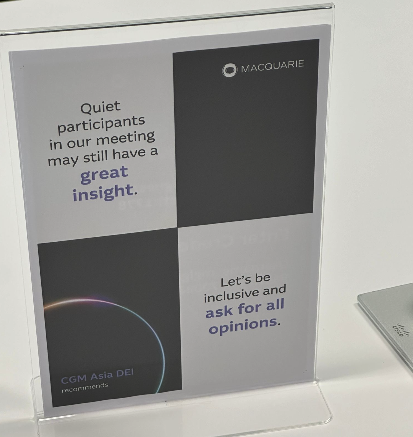
When we invite the quieter voices in the room to provide their opinions, we open opportunities to change the game completely.
Last year, I saw this very simple but powerful sign in a meeting room at Macquarie Bank. It’s a helpful reminder to those in meetings to stop, reflect and ask for the views of those quieter voices.
What Else Can We Do?
Challenge the "Standard": Stop asking why someone can’t do things the "normal" way and start asking what environment helps them thrive.
Practice Active Patience: Give people the space to process information at their own speed.
Celebrate the Friction: Differences can cause friction, but friction is also what creates fire. Use that energy to spark new ideas.
If you’d like to hear more, join us for our complimentary LeadUP@Lunch webinar on the topic of Neurodiversity & Inclusion on 19th March 2026 at 13:00 SGT.
